

Cash Transfer
North Horr, Marsabit
January 2025 · Field Update
In September 2024, 300 households in North Horr Sub County, Marsabit, began receiving KES 4,641 in emergency cash every month. For families who had just watched their livestock — and their livelihoods — disappear under drought and then floodwater, it was a lifeline that arrived exactly when it was needed most.

The Crisis That Made This Necessary
Northern Kenya’s pastoral communities have always lived with the rhythm of drought. But the crisis that preceded the SERVE project was different in scale. Three consecutive years of below-average rainfall had decimated herds across Marsabit, Turkana, and the wider ASAL region. Then came El Niño — and the floods that followed brought a second wave of destruction, washing away the livestock that had survived the drought.
For nomadic pastoralist families, livestock is not just income. It is savings, insurance, nutrition, and social standing. Losing herds to drought and floods simultaneously left households with nothing to fall back on. Hunger and malnutrition followed quickly.
The SERVE Project
The Sustained Emergency Response and Recovery for the Most Vulnerable Households in the ASAL Counties of Kenya (SERVE) is funded by the Bureau for Humanitarian Assistance (BHA) under USAID. The project commenced in July 2024 and runs through June 2025, with Concern Worldwide as the lead partner and Pastoralist Concern Kenya (PCK) implementing on the ground in North Horr Sub County.
PCK’s mandate within SERVE covered two areas: cash transfer and agriculture. In the cash transfer component, PCK concentrated in North Horr — one of the most remote and underserved areas in Marsabit County — where PCK’s decade-long grassroots presence and community trust made it the right implementing partner.
Households reached in North Horr Sub County
People directly benefiting (approx. 6 per household)
Monthly cash transfer per household, 5 months
Of beneficiary households represented by women
Who Was Reached — and Why
Targeting was done in collaboration with the community itself, applying criteria that identified the households at greatest risk. These included families in mapped malnutrition hotspots, pregnant and lactating mothers, female-headed and child-headed households, elderly members, and households with critically ill members. Households were also required to own 1–5 milking goats or cattle — a sign of productive potential, but current fragility.
Of the 300 households identified, 279 were represented by women — reflecting both the demographic reality of pastoralist communities during crisis (men often migrate with surviving livestock while women, children, and the elderly remain) and PCK’s deliberate commitment to gender-responsive programming.
How the Disbursements Were Handled
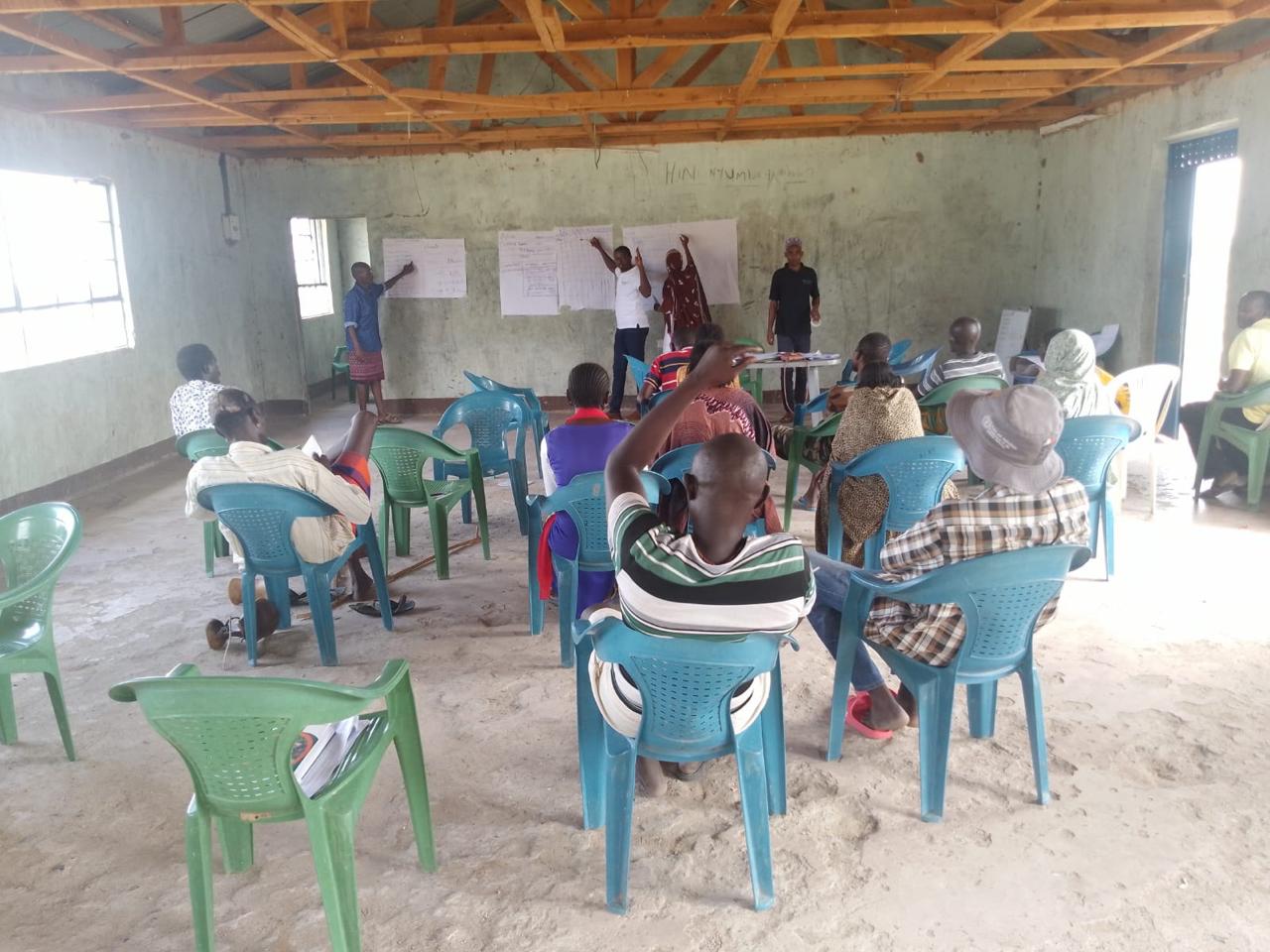
Cash transfers ran from September 2024 through January 2025. Before each disbursement, PCK contacted households directly by telephone — a deliberate adaptation after teams noted the high level of illiteracy in the project area. Families were informed when money would arrive so they could plan. Community sensitisation ensured people understood what was coming, how to access it, and what feedback mechanisms were available if anything went wrong.
“The cash transfer was implemented at a time when communities were facing the most severe difficulties, having lost livelihoods due to environmental factors. The cash provided immediate purchasing power to households who had no other income source.”
Silas Otieno, PCK Programs Manager — SERVE Progress Report
Gender Intentionality on the Ground
PCK’s gender inclusion approach went beyond beneficiary selection. Community sensitisation meetings were scheduled around women’s availability, accounting for domestic responsibilities. Transportation brought cash access points closer to where women were located. Landcruisers were used in the livestock feed component to deliver closer to households — removing the physical barrier of carrying heavy bags across distance, which disproportionately affected women.
About the SERVE Project: Funded by USAID/BHA and implemented in partnership with Concern Worldwide, the SERVE project delivers emergency humanitarian assistance to households affected by cumulative drought and El Niño floods across Kenya’s ASAL counties. PCK leads implementation in North Horr Sub County, Marsabit. Project period: July 2024 – June 2025.

