Livestock & Agriculture
North Horr & Dukana Wards
March 2025 · Field Update
Across 27 distribution points in North Horr and Dukana wards, Marsabit County, Pastoralist Concern Kenya distributed 8,326 bags of nutritious livestock feed to 2,350 households. The operation was not just logistical. It was an act of keeping an entire pastoral economy alive long enough to recover.

Why Livestock Feed — and Why Now
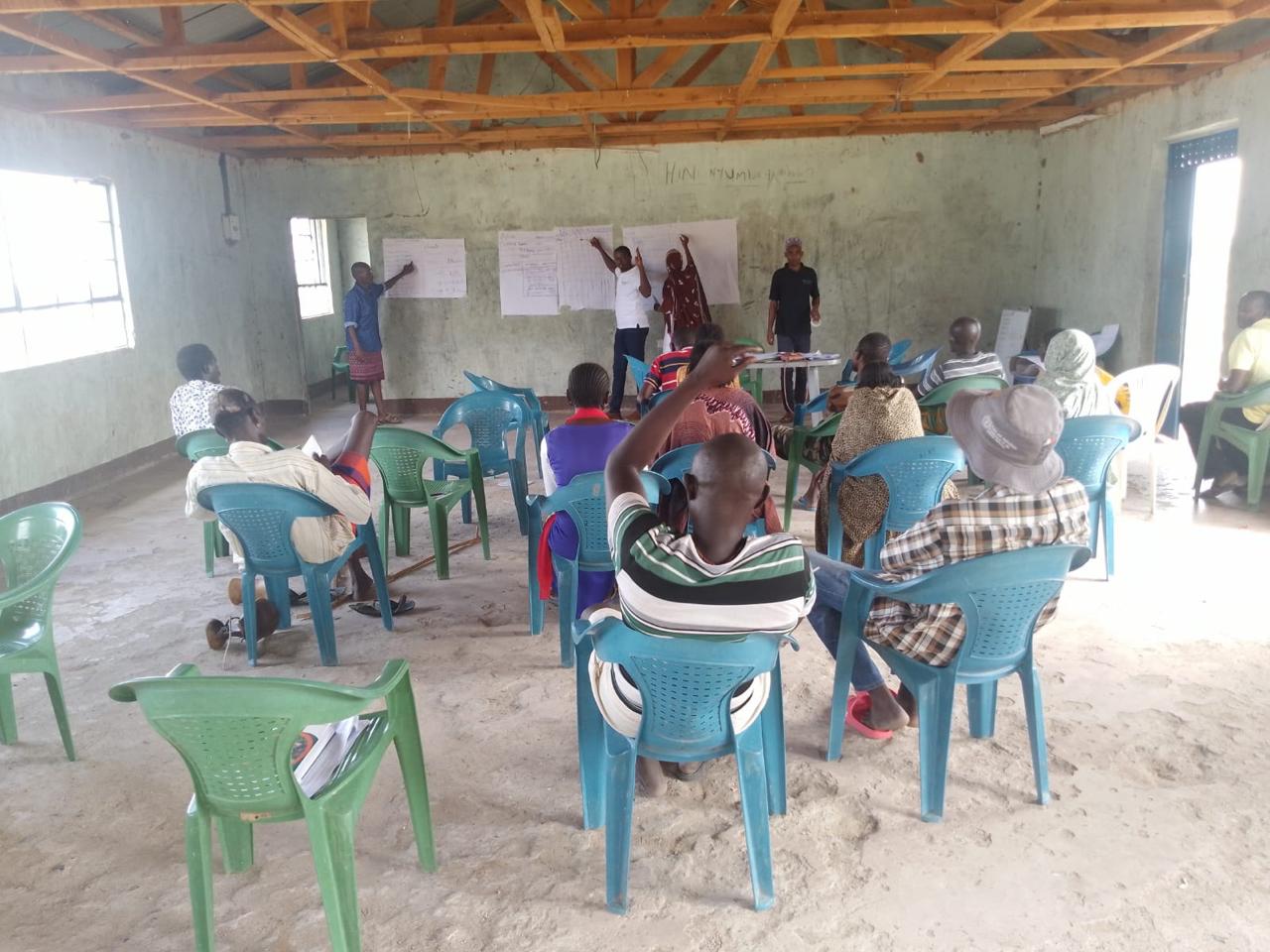
When PCK’s field teams conducted participatory planning sessions with communities in North Horr and Dukana, the answer was immediate and consistent: the priority was feed for their livestock. Not seeds. Not tools. Feed.
The reasoning was straightforward. Drought had already killed large numbers of animals. El Niño floods had then killed more. The surviving livestock — the breeding stock, the milking animals, the animals families had held onto at enormous cost — were now surviving on depleted rangelands with almost no natural fodder available. If those animals died, recovery would be set back by years. A single bag of feed could be the difference between a herd that survives and a family starting over with nothing.
The Scale of the Operation
Through an open tender process advertised in the Daily Nation newspaper, PCK procured 8,326 bags of 50kg livestock feed. The order was delivered to PCK’s field office in North Horr, from where it was distributed across two wards, multiple sub-locations, and 27 named distribution points.
Distribution Summary
Total households targeted across both wards
50kg bags of livestock feed distributed
Projected beneficiaries across both wards
Distribution points across North Horr and Dukana
Two Wards, Two Realities
PCK’s needs assessment found a meaningful difference in fodder availability between the two wards. North Horr Ward had lower fodder levels than Dukana, which informed the allocation decision: households in North Horr received 4 bags each (across six sub-locations including El-Isako Malla, Galas, Malabot, El-besso, and Qorqa), while Dukana households received 3 bags each across 21 distribution points covering Dukana Centre, Balesa Town Centre, Kubi Adhi, Galan, and surrounding communities.
In Dukana, two sub-locations — Dukana and Balesa — were prioritised due to their higher population concentration. Thirteen households in Kubi Idha and 13 in Buriya received an additional bag each, from surplus stock provided by the supplier to account for transportation spillage.
Community as Partner, Not Recipient
The SERVE project required a 30% community contribution. Rather than treating this as a hurdle, PCK and the community approached it as a genuine partnership mechanism. Contributions were practical and meaningful:
Provision of feed storage space at distribution points
Loading, off-loading, and sorting at distribution sites
Community mobilisation and beneficiary identification support
Security for stored feed and assistance to vulnerable households
Navigating a Stop Work Order
The agriculture implementation was affected by a US government stop work order issued early in 2025. This disrupted the original timeline and required PCK to adapt procurement processes under tighter timeframes. Due to the short period remaining after the order was lifted, internal control provisions were used to shorten the tender period while maintaining full compliance with procurement standards and Concern Worldwide guidance.
Despite the delay, the distribution was completed across all targeted wards. Post-distribution monitoring is currently pending as of the time of this report.
“Through participatory planning, the community identified provision of nutritious feed for livestock as a priority intervention. The livestock feeds have been distributed and monitoring is pending.”
PCK SERVE Progress Report — March 2025
About this programme: The SERVE livestock feed distribution is part of the USAID/BHA-funded SERVE project, covering Agriculture and Food Security components in North Horr and Dukana wards, Marsabit County. PCK leads implementation in partnership with Concern Worldwide and the County Government of Marsabit.